By Cole Lauterbach/Illinois Radio Network
WASHINGTON – Three suburban Chicago Congressman who remained undecided into Thursday on House Republicans’ latest plan to replace Obamacare joined the majority in voting to approve the historic legislation.
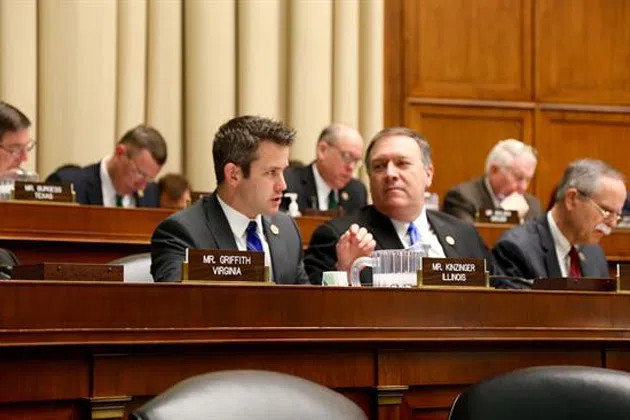
With no Democrats supporting the measure, the U.S. House voted, 217-213, to replace large parts of former President Barack Obama’s signature Affordable Care Act. Twenty Republicans voted against replacement, and no Democrats supported it. GOP U.S. Reps. Peter Roskam of Wheaton, Randy Hultgren of Plano and Adam Kinzinger of Joliet joined fellow Illinois Republican lawmakers in voting in favor.
“We cannot wait any longer to bring relief to the American people suffering under Obamacare,” Kinzinger said in a statement. “In Illinois, premiums have gone up more than 40 percent. Across the country, outrageous deductibles and fewer provider choices are commonplace under Obamacare.”
Republicans Rodney Davis, Darin LaHood, Mike Bost and John Shimkus also voted for replacement. Like Congressional Democrats nationwide, all of Illinois’ Democratic representatives voted against passage.
Davis said Republicans made a promise to the American people to fix the nation’s broken health care system, and Thursday’s vote is a promise kept.
“President Obama and Democrats in Congress had seven years to fix Obamacare through regulatory reforms, which did not need congressional approval, but failed because the law is fundamentally flawed,” Davis said in a statement. “Obamacare is collapsing and we have a duty to our constituents to pass a solution.”
Among the differences between the legislation that passed Thursday and the one that was pulled from the House floor in March without enough GOP support to pass it are three amendments.
The McArthur Amendment gives states flexibility to find savings for the marketplace, within limits.
“If a state comes to us with a good idea, they would have to pass a bill through their state legislature explaining what that’s going to do to achieve the goals and cover pre-existing conditions,” Davis told Illinois News Network earlier this week.
The Palmer-Schweikert Amendment creates a new federal risk-sharing program for high-risk individuals such as those with pre-existing conditions whose coverage has lapsed for more than 63 days and who will be charged higher premiums.
And the Upton Amendment, proposed just Wednesday, adds $8 billion over five years to the $15 billion allocated through the Palmer-Schweikert Amendment.
Thursday’s passage sets up a battle in the U.S. Senate, where Republicans hold a razor-thin 52-46 majority over Democrats, plus two independents who caucus with Democrats.
Because of the rising costs of premiums and diminishing competition in the marketplace, Republicans have made repealing and replacing Obamacare a top priority since it passed in 2010.
In Illinois, premiums were expected to increase up to 45 percent this year for individual health care plans. And about one-third of Illinois consumers who buy health insurance through the marketplaces set up under Obamacare have only one option this year. That includes three Illinois counties in Hultgren’s suburban Chicago district.
Some states, including Iowa, risked having no insurers participating in their marketplaces in 2018 because they said they were losing money.
Gov. Bruce Rauner expressed some concerns about the replacement legislation.
“The bill that passed in the U.S. House today continues to be of deep concern to our administration,” Rauner said in a statement. “Recent changes did not address fundamental concerns about the bill’s impact on the 650,000 individuals that are part of our Medicaid expansion population, nor have those changes eased the concerns of the 350,000 people in the individual market who are dealing with skyrocketing premiums and fewer choices. We will continue to voice our concerns as the law moves to the Senate.”
Illinois is heavily reliant on federal dollars from Obamacare. The Illinois Health and Hospital Association projects the state will lose $40 billion in the next decade under the new Republican bill.
The nonpartisan Congressional Budget Office estimated that the initial Republican bill, before the amendments were added, would save tens of billions of dollars but result in 24 million fewer people having health insurance by 2026. The CBO has not yet released a report on the revised replacement.
Bost said while the replacement legislation isn’t perfect, it’s better than Obamacare.
“The American Health Care Act is not perfect, but it is a step in the right direction to decrease premiums and expand and enhance health care options so Americans can find a plan that’s right for them,” Bost said in a statement. “Importantly, the bill provides a stable transition to help ensure low-income Americans have access to quality, affordable options through a new, competitive, state-based private insurance marketplace.”
Here are some of the key elements of the bill, as compiled by The Associated Press:
· Ends the tax penalties that Obamacare places on individuals who don’t purchase health insurance and larger employers who don’t offer coverage to workers.
· Halts extra payments the federal government sends to states that expanded Medicaid under Obamacare. Caps the amount of Medicaid dollars disbursed to states at a fixed amount.
· Replaces subsidies for people buying individual policies, based mostly on income, with tax credits. The credits are refundable, which means they even go to people with little or no tax liability.
· Requires insurers to assess 30 percent surcharges on consumers who let their coverage lapse for more than 63 days in the past year.
· Allows states to get federal waivers allowing insurers to charge older customers higher premiums than younger ones by as much as they’d like. Obama’s law limits the difference to a 3-1 ratio.
· Retains Obamacare’s requirement that family policies cover grown children to age 26.